How Equity Actually Vests: The Two Diagrams Nobody Shows You
Your grant has a shape, and a queue. One decides when the shares become yours; the other decides whether they're worth anything. Both are drawn here.
By JobPost Team · Aug 22, 2026 · 7 min read
Most equity conversations stop at a number. "You'll receive 40,000 options." That number, on its own, tells you almost nothing about what you're being offered.
Two mechanics decide what it's actually worth. The first is the schedule on which the shares become yours. The second is where you stand in line when the company is sold. Neither is usually explained, and both are easier to understand as a picture than as a paragraph.
The shape of a grant
Vesting is the schedule on which your grant converts from a promise into something you own. The near-universal standard is four years with a one-year cliff.
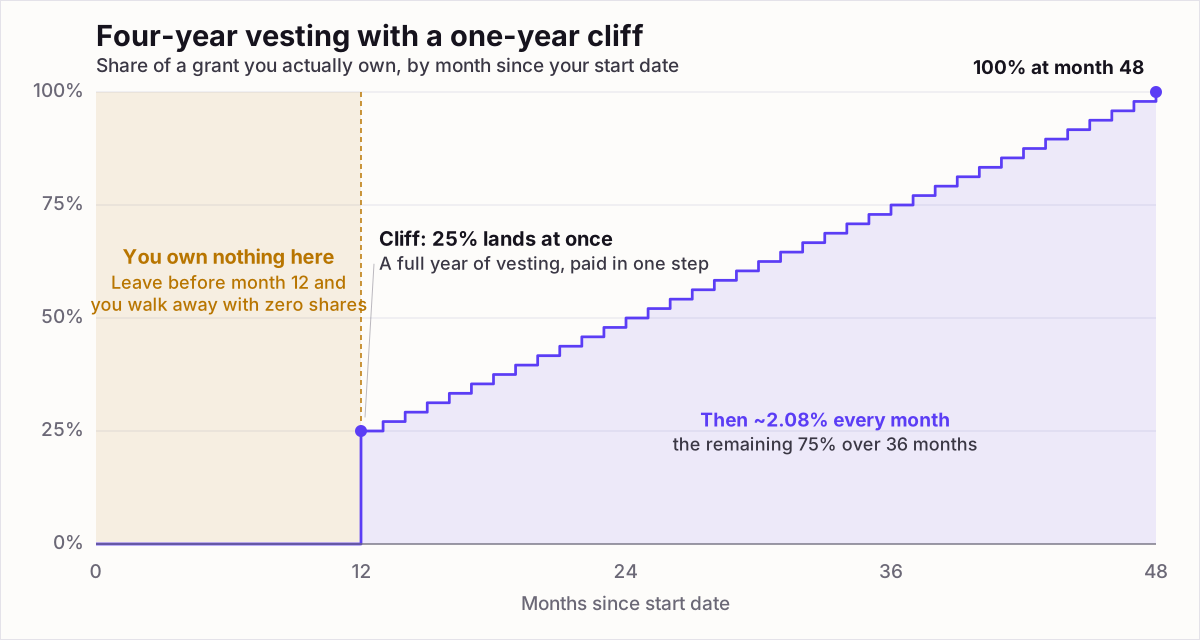
Three things follow from that shape, and all of them matter more than the headline number.
The first year is all-or-nothing. Leave at month 11 and you own zero shares. Not 11/48ths — zero. The cliff exists to make sure the company doesn't hand equity to someone who doesn't work out, and it does that job completely.
Month 12 is a step, not a slope. A quarter of the grant lands at once. This is why departures cluster just after the one-year mark, and why some companies quietly track it.
After the cliff, it's mechanical. The remaining 75% vests in equal monthly increments — about 2.08% a month — until you're fully vested at month 48. There's nothing discretionary about it.
The number that actually matters
Share count is close to meaningless without a denominator. 40,000 options is a great grant at a company with 4 million shares outstanding and a rounding error at one with 400 million.
The number to ask for is your grant as a percentage of fully diluted shares outstanding. If a company won't tell you that, treat the omission as information.
Then ask for the 409A valuation — the appraised fair market value of the common stock, which sets your strike price. If your strike price is close to the current 409A, most of the value is still ahead of you. If the company has raised at a much higher price since the last 409A, that gap is where your upside lives.
The queue you're standing in
Here's the part that surprises people. Even with a fully vested grant and a real exit, you can end up with nothing — because your shares are common stock, and common stock gets paid last.
Investors typically hold preferred stock carrying a liquidation preference: the right to take their money back before anyone else sees a cent.
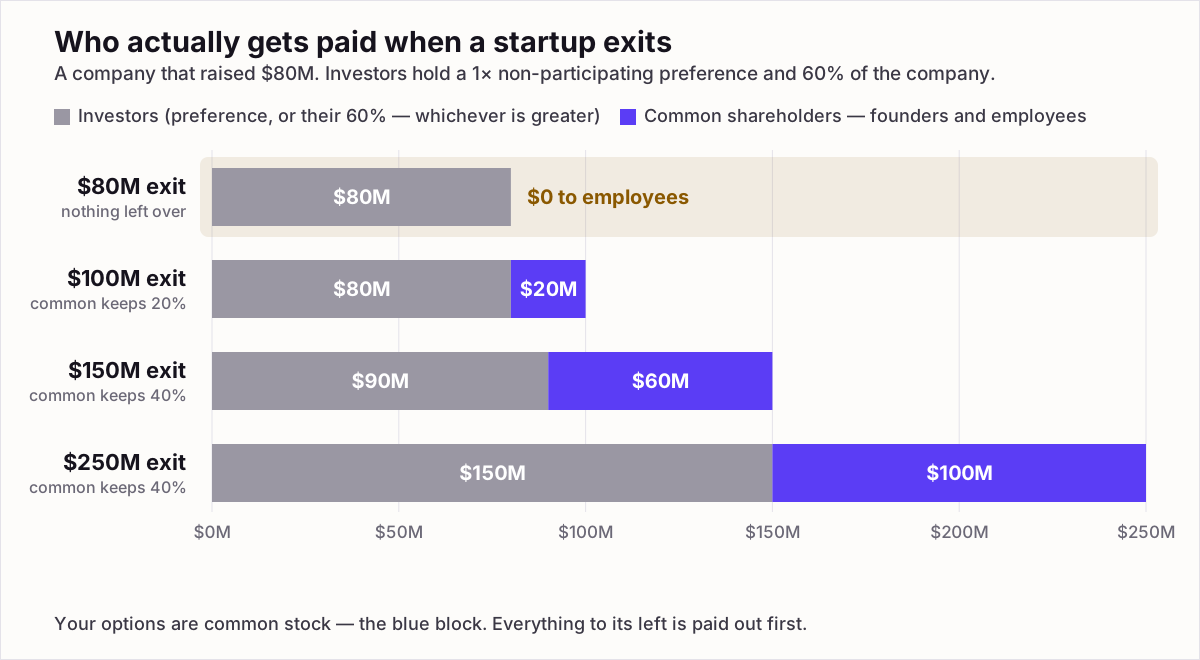
Read the top row again. An $80M acquisition — a number most people would call a good outcome — returns exactly zero to every employee at this company, because the investors' preference consumes the entire sale price.
Employee payout, $80M exit: $0 What common shareholders take home once the preference is paid.
This is why "we sold for nine figures" and "the team made money" are separate claims. They're often both true. They're sometimes not.
What's actually negotiable
Most candidates negotiate the share count and stop. The terms around it are often more movable, and sometimes worth more:
- The post-termination exercise window. The default is 90 days after you leave. If you can't fund the exercise plus the tax bill in that window, vested options expire worthless. Extended windows of 5–10 years exist and are worth asking for by name.
- Acceleration on acquisition. Double-trigger acceleration vests your remaining shares if the company is acquired *and* you're terminated. Without it, an acquirer can let you go and keep your unvested equity.
- Early exercise. Lets you buy unvested shares up front, starting the capital-gains clock earlier. Only sensible if you can afford to lose what you spend.
- A larger refresh, rather than a larger initial grant. Some companies won't move on the offer grant but will commit to an annual refresh in writing.
The honest summary
Startup equity is a real form of compensation and occasionally a life-changing one. It is not a substitute for salary, and it should not be valued at whatever number the recruiter multiplies out for you.
Value it at what you'd accept if it went to zero — because for most startups, it does. Then treat anything above that as upside you negotiated for on purpose. When you're comparing offers, put the equity next to the total compensation picture rather than beside the base salary alone.
Sources & further reading
- Vesting schedule — the mechanics behind the first diagram
- Liquidation waterfall — the payout order behind the second
- 409A valuation — how a strike price gets set
- Stock options and RSUs — the two grant types and how they differ
- Equity compensation — the broader overview
Both diagrams are worked examples built from the stated assumptions, not survey data. The second models a 1× non-participating preference with investors holding 60% — a common but not universal structure. Your own cap table is the only one that describes your offer.